




Orkney
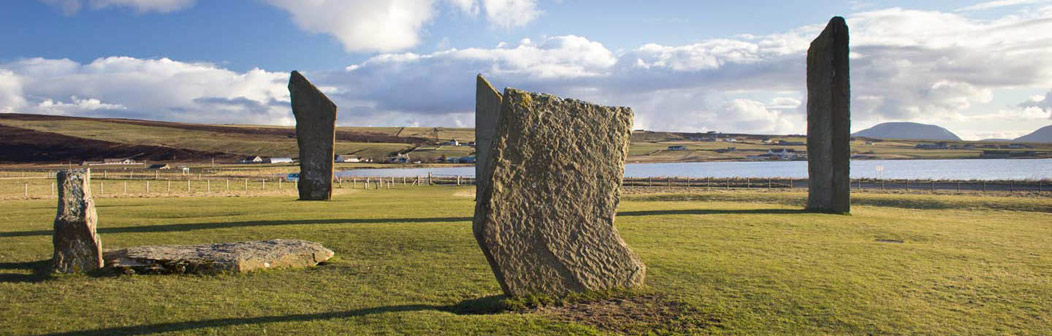
Orkney is a gem and this wonderful group of islands offers far, far more than can be fitted into a single holiday. The amazing Neolithic sites of Skara Brae, Maes Howe, the Tomb of the Eagles and the Ring of Brodgar all cry out to be visited.
Orkney Self Catering Cottages
Herston Hall
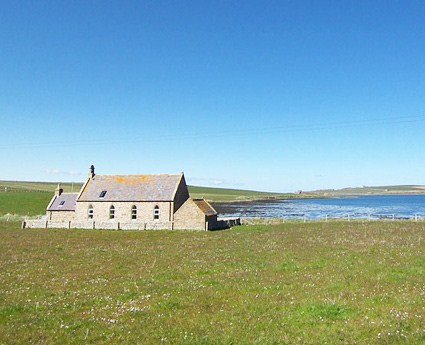

From £595 to £850
- Sleeps: 2
- Bedrooms: 1
- Pets: No


 Last Minute - w/c 13 Jun 26
 East Denwick Mill
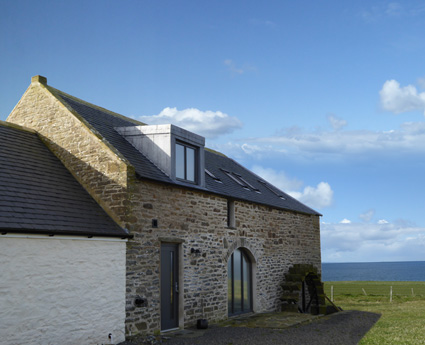

From £495 to £995
- Sleeps: 4
- Bedrooms: 2
- Pets: No
More than one promotion available.The Ruff
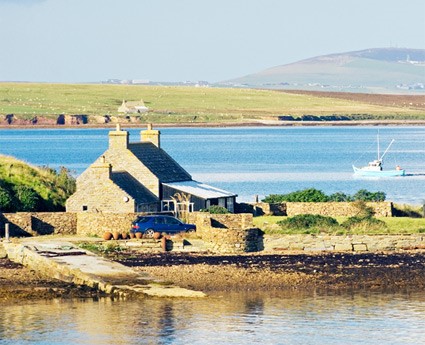


From £650 to £950
- Sleeps: 4
- Bedrooms: 2
- Pets: Yes (1)
 Last Minute - w/c 13 Jun 26
 Bay Cottage at Skara Brae


From £550 to £950
- Sleeps: 4
- Bedrooms: 2
- Pets: No
 Last Minute - w/c 13 Jun 26
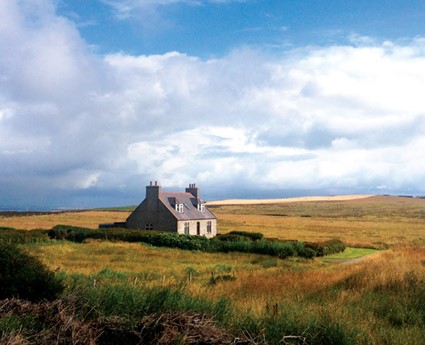
 Rinibar House

From £595 to £1295
- Sleeps: 4/10
- Bedrooms: 5
- Pets: No
Last Minute - w/c 13 Jun 26 
a loved one to
the break they
deserve?
Historical Delights to Explore
The spectacular sea stacks such as the Old Man of Hoy, wonderful beaches, rocky cliffs and amazing bird life are further attractions as are more modern creations such as the Churchill Barriers and the Italian Chapel.
It is an archipelago full of surprises, not least among them discovering how many different ways you can access a burial chamber. Going in lying on your tummy on a bogie at the Tomb of the Eagles is a particular favourite!
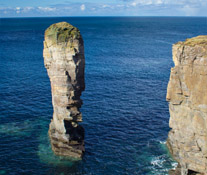
The capital, Kirkwall, has all facilities, including the lovely cathedral and the Earl's Palace alongside. Ferries run to many of the outer isles from here, and it is possible to access these in a day trip. The second town, Stromness, is a really picturesque wee place, with narrow cobbled streets, where you will find many interesting craft shops. Just north of Stromness are the spectacular Yesnaby Stack.
There is so much to do on the 'mainland' that it can be difficult to find time to visit the outlying islands. One of the most accessible of these is Hoy, and it is certainly a worthwhile trip. There is a superb beach at Rackwick, and from there you can walk round the cliffs to the Old Man. At Lyness, where the ferry docks and which is the only real settlement, there is the Scapa Flow Visitor Centre, which charts Orkney's military history in both world wars. It is an absolutely fascinating place with lots of hands-on features and films and is an excellent destination for a rainy day.
-
No. of cottages found
5

 INDEPENDENT FEEDBACK
